State VS Action Verbs - The difference & The implications
Welcome to our guide on State versus Action Verbs in English!
So, what’s the difference?
Action Verbs describe activities, processes, or events that we can see or do. They refer to actions that happen physically or mentally (e.g., run, eat, drink).
State Verbs describe a condition, feeling, or possession. They express states of being rather than actions and often refer to thoughts, emotions, senses, relationships, or possession (e.g., believe, love, own).
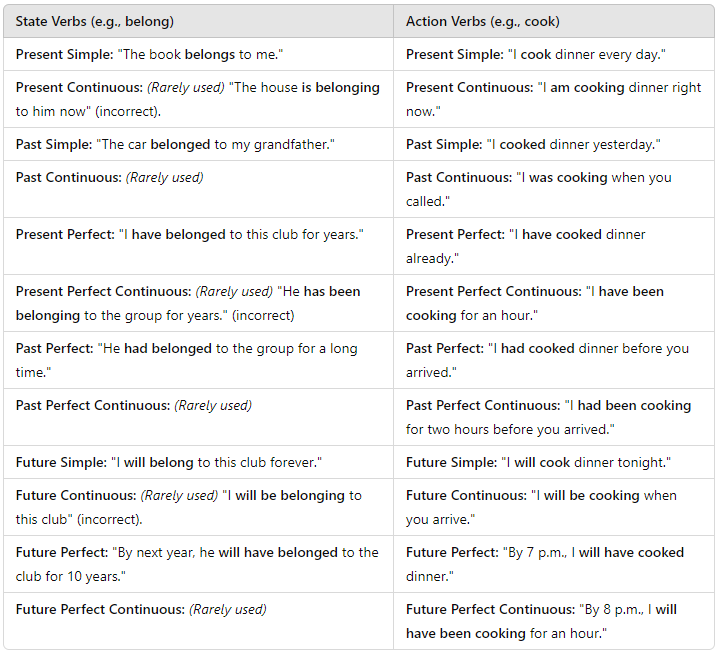
A key point is that action verbs can be used in all verb tenses, including continuous forms, while state verbs are rarely used in continuous tenses.
Have a look at the table below.
So, we’ve just seen that ACTION verbs can be used in any tense whereas STATE verbs are usually only used in the Simple, i.e. non-continuous, tenses.
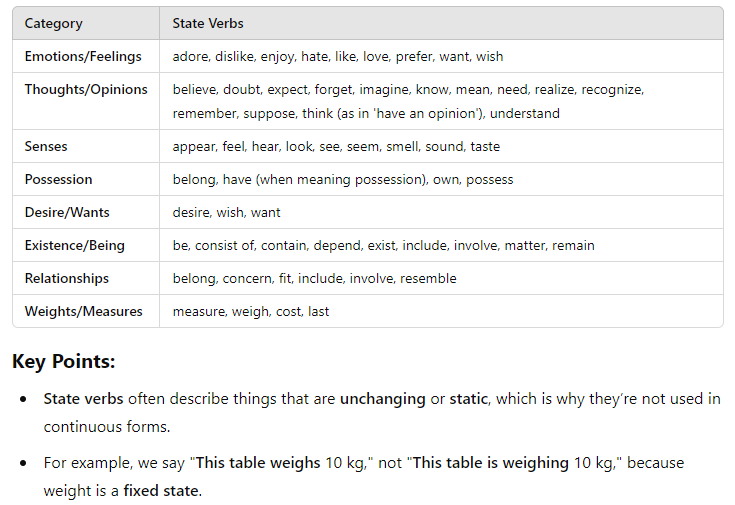
Now, let’s look at some of the most common state verbs:
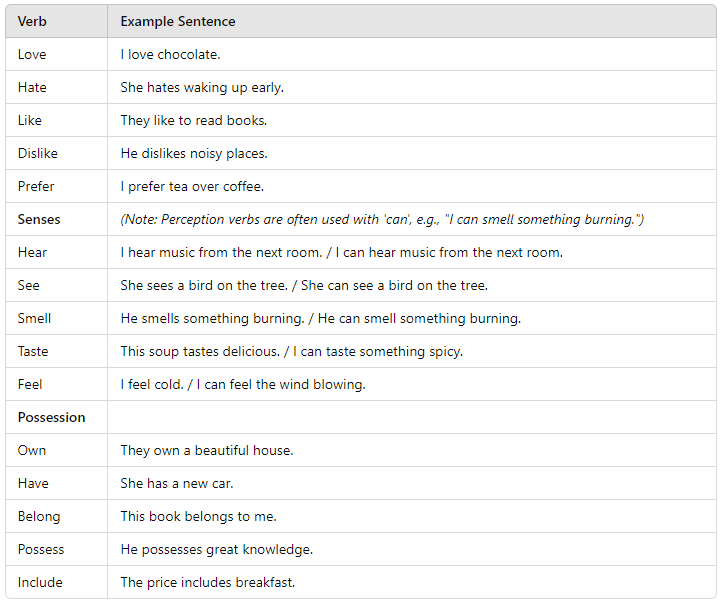
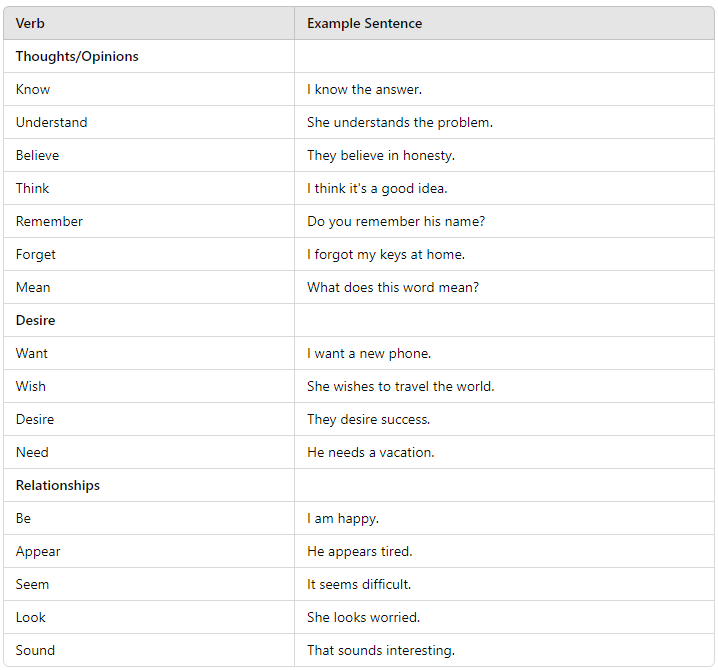
Have a look at some of those verbs used in short, example sentences below:
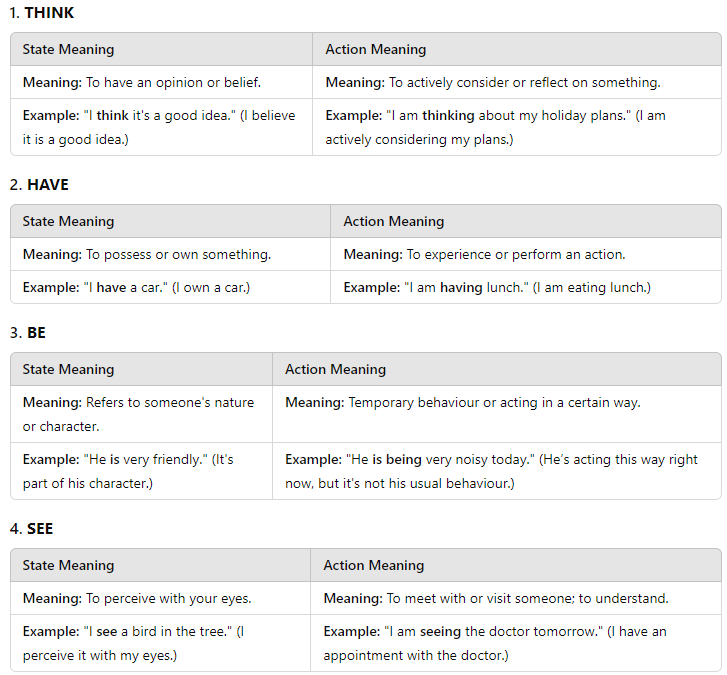
So far so good? Ok, well…There are some very common verbs which have one meaning when used as a STATE and mean something completely different when used as an ACTION! Have a look at these: