Introduction: Understanding State and Action Verbs
In English, verbs can be divided into two main types: state verbs and action verbs. Knowing the difference between them is essential for using tenses correctly!
State verbs describe conditions, feelings, possession, or thoughts—things that are not happening but simply are. For example: belong, know, love.
Action verbs, on the other hand, describe actions or events that happen or can happen, such as cook, run, read.
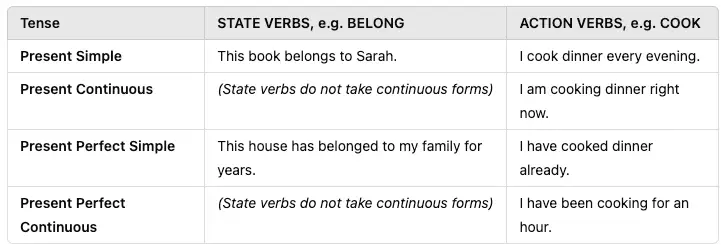
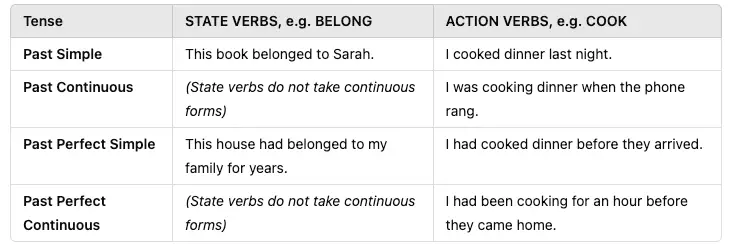
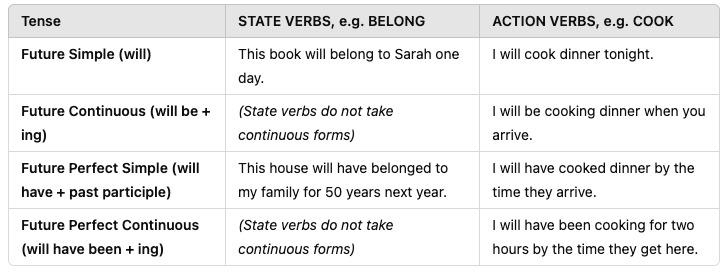
Because states are not actions or processes, we don’t use state verbs in Continuous (progressive) tenses like I am knowing or I have been belonging. These forms simply don’t work in English.
In the tables below, you’ll see how these two types of verbs behave across different tenses. Notice how state verbs never appear in Continuous forms!
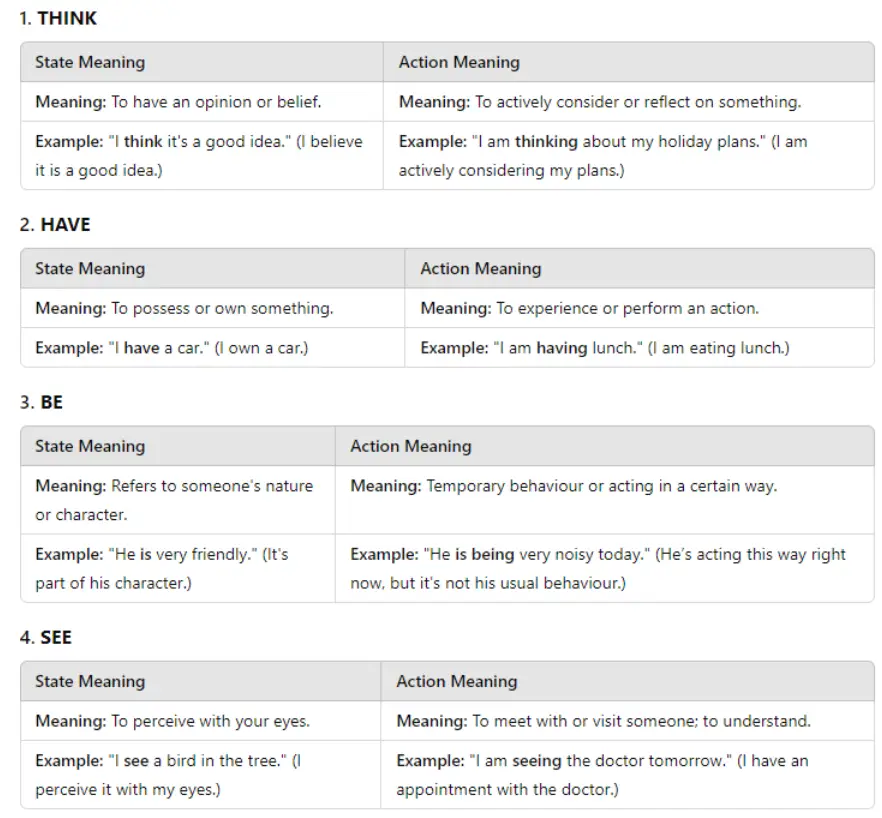
However, some ‘state’ verbs are used in the continuous tenses, but with a completely different meaning from their usual ‘state’ meaning. Take a look at the below:
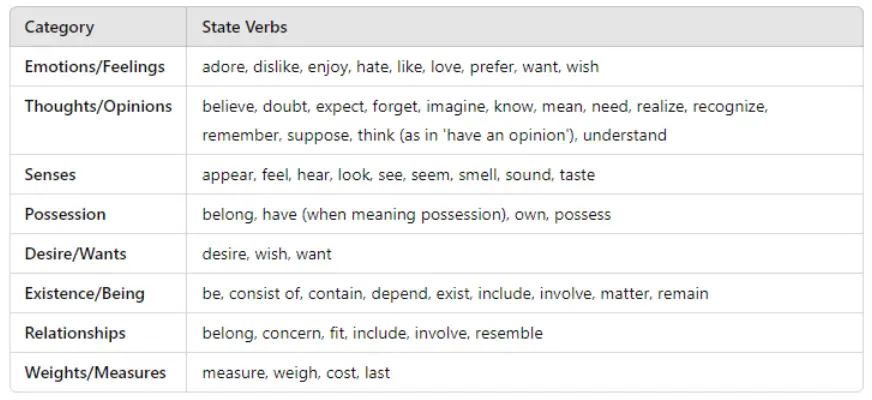
Now, here is a table listing some of the most common ‘state’ verbs:
Finally work through the interactive window for some more detail. You can zoom the window to fill your screen. If you are on a mobile phone, put it into landscape view.
Login
Accessing this course requires a login. Please enter your credentials below!